


Most people are thinking about HumanPods wrong.
This is not an earbud story.
It is an operating system story.
That is the first reversal that matters.
The market still reads products like this through the old lens: gadget, accessory, audio hardware with AI attached. But Natura Umana is clearly building something larger. HumanPods are the hardware access point. NatureOS is the software layer. tinyPeople are the behavioral model. Together, they point toward a different computing paradigm: voice-first, agent-driven, and designed to reduce screen dependence.
I was an early backer of the Kickstarter. After delays, mine just shipped and should be here in the next 5 to 10 days. That matters because I’m not writing about this as a distant observer. I’m writing about it as someone who backed the system early, now has the hardware inbound, and is about to test whether the promise actually holds up in real life.
But the stronger signal showed up before the hardware did.
I already got access to the tinyPeople agent layer through iMessage, and it is already proving outstanding.
That is the real story.
The bundle is not the breakthrough
The old model is familiar.
Buy hardware.
Open apps.
Jump between interfaces.
Manually manage your own digital life.
The new model is simpler.
Speak once.
Route the task.
Let the system carry context.
Get back action, updates, or decisions.
That is what Natura Umana is trying to build. On its site, the company describes HumanPods as open-ear earbuds that instantly connect you to tinyPeople, while NatureOS is the app layer that lets you interact with those agents across voice, text, images, documents, and voice notes.
This is not a better app.
This is an attempt to replace the app habit itself.
What HumanPods really are
On the surface, HumanPods are straightforward: open-ear wireless earbuds built for voice interaction, environmental awareness, and all-day wear. Natura Umana says they use a patented Gravity Hook, keep the ear canal open, offer 9 hours of playtime on a charge plus 24 additional hours from the case, and support ENC with dual-mic noise cancellation for clearer calls. The interaction model is also important: tap-based access instead of passive always-on listening.
But the hardware is not the moat.
It is the bridge.
HumanPods solve the last-inch problem of AI. Intelligence is far less useful when access still requires opening a phone, switching context, typing prompts, and navigating apps. HumanPods are built to make the system ambient.
Convenience is not the same as continuity.
That is where this product gets more interesting.
NatureOS is the real product
NatureOS is where the actual leverage sits.
Officially, it is an iOS and Android app that connects to HumanPods and lets users talk to tinyPeople. That description is accurate, but too small. A better mental model is this: NatureOS is a consumer AI operating system where agents persist, memory compounds, and delegation becomes the interface.
Most consumer AI still behaves like a tool.
You open it.
You ask.
It responds.
The session ends.
NatureOS is pushing toward a different structure.
Persistent agents.
Persistent memory.
Persistent delegation.
Natura Umana says tinyPeople are designed to emulate human behavior and conversation. Each one has a unique personality, voice, skills, and purpose. Over time, they develop memories, opinions, and even core beliefs. The system also centers on tinyNature, the primary tinyPerson that knows you best and can route you to other specialized agents when needed.
This is not one chatbot with better branding.
This is a system trying to turn AI into a network of specialists.
From assistant to human architecture
That shift matters more than most people realize.
The big conceptual move here is not “AI in earbuds.”
It is “AI as a structured social layer.”
Natura Umana is not presenting these agents as utilities. It is presenting them as human-like specialists with role-specific memory and purpose. That maps more naturally to how real delegation works. In the real world, you do not ask one generalist to handle every job. You route tasks to different people based on context, trust, and specialization. Natura is trying to bring that same logic into consumer AI.
Old model: one assistant, broad but shallow usefulness.
New model: many agents, cleaner context, deeper specialization, more natural delegation.
The future AI winners may not be the ones with the single smartest model.
They may be the ones that build the best system for routing intelligence.
Why the early experience already feels different
This is where it stopped feeling theoretical for me.
Just by connecting to my personal email, the tinyPeople layer is already monitoring credit-score-related impacts, helping surface relevant signals, and keeping me up to date with close friends. That does not feel like chatbot novelty. It feels like practical lift.
That is the dividing line.
Most consumer AI still answers questions.
Very little consumer AI reduces cognitive load.
What makes this system feel strong is not just model quality. It is the combination of three things:
Memory.
Integration.
Agent structure.
When those three combine, AI stops feeling like software and starts feeling like delegated capacity.
The real leap in consumer AI is not better answers. It is fewer decisions.
Kickstarter progress matters, but not in the obvious way
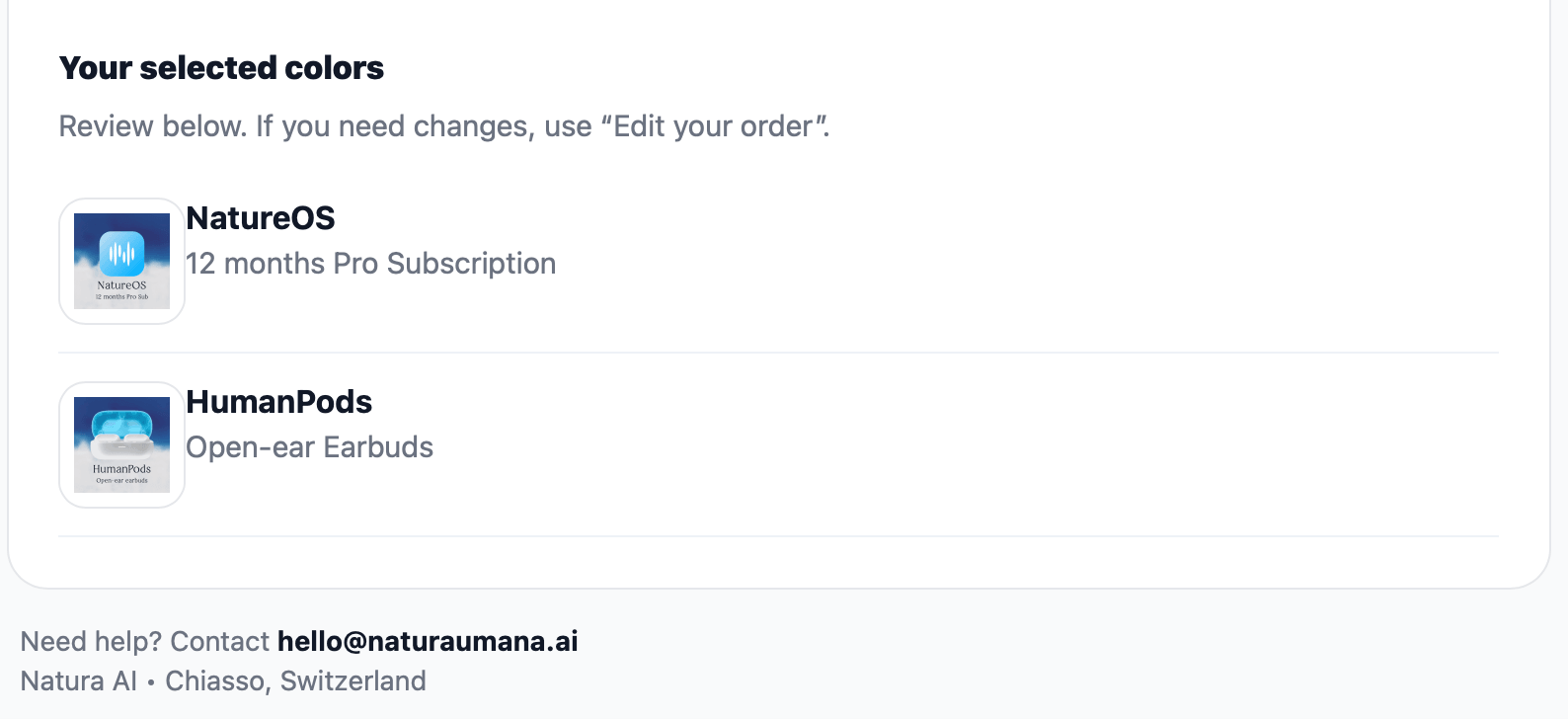
The Kickstarter campaign launched on July 29, 2025 with a clear thesis: voice-driven AI software and hardware, voice replacing screens, and repetitive tasks being delegated so users can focus on what matters. The campaign FAQ said HumanPods were planned to start shipping in November 2025, with NatureOS for iOS first and Android later.
Like many ambitious hardware projects, it hit delays.
That is the easy headline.
The more important signal is what happened underneath.
The company now says it is shipping HumanPods, iOS first, while continuing the NatureOS rollout. Its current preorder page also says Android is planned for Q2 2026.
That sequencing matters.
Software value arriving before hardware maturity is not a weakness. In products like this, it is often the right order. If the agent layer is already useful before the earbuds arrive, then the hardware becomes an amplifier, not a crutch.
That is how platforms start.
Software proves the behavior.
Hardware deepens it.
What I’m going to test
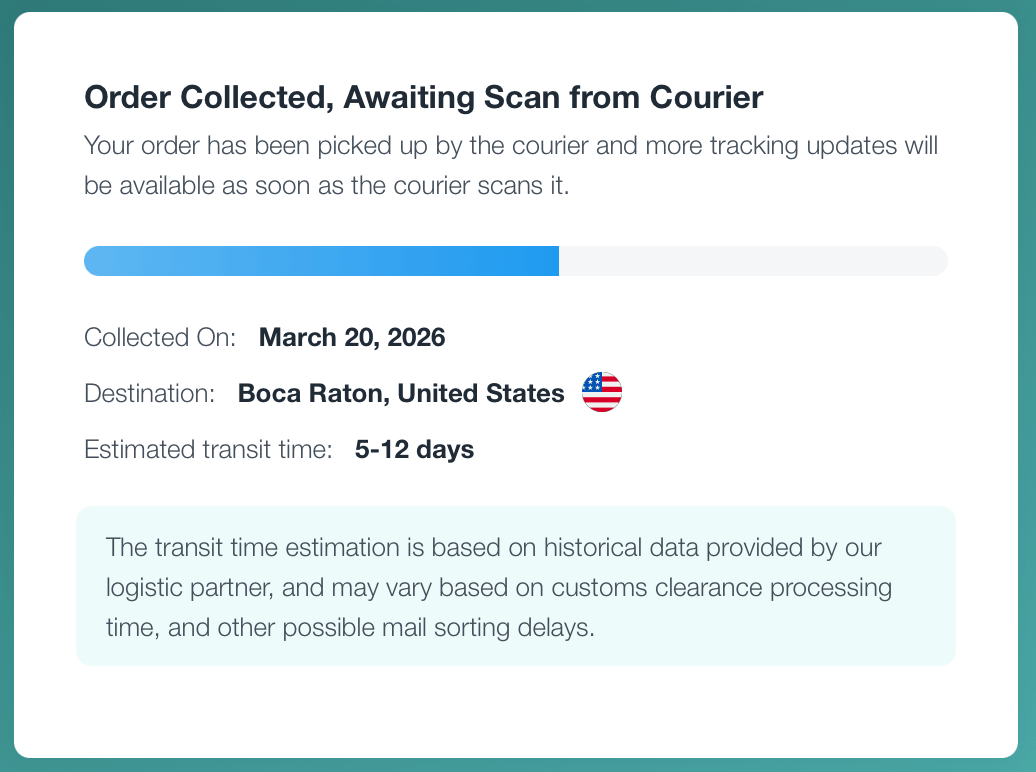
Now that mine has shipped, the next step is simple: test whether the system holds up outside the pitch.
Not in demo conditions.
Not in launch copy.
In daily use.
That means I’m going to be testing this across the areas that actually matter:
How natural the voice interaction feels
How fast the system routes and responds
Whether HumanPods make NatureOS more useful or just more convenient
How well tinyPeople retain context over time
Whether proactive utility keeps compounding after the novelty wears off
That is the real threshold.
A lot of AI products look smart in isolation.
Very few become behaviorally sticky.
The question is not whether HumanPods can demo well.
The question is whether NatureOS can become part of how you actually operate.
The behavioral shift is the whole point
Most people still think AI adoption is about capability.
It is not.
It is about behavior change.
It is not.
It is about behavior change.
The smartphone trained users to live inside interfaces: tap, swipe, scroll, switch, repeat.
Natura Umana is betting on a different model. Its stated mission is to reduce distraction, bring users back to more natural interaction, and let voice become the control layer for technology. HumanPods and NatureOS are explicitly framed as a combined hardware and software stack built around that idea.
That is a much bigger bet than better earbuds.
It is a bet that the dominant interface behavior of the last fifteen years is now inefficient.
And if that is true, the next layer to break is not the screen.
It is the app.
Why now
The timing here is not random.
Model capability is finally good enough for useful delegation.
Users are exhausted by screen saturation.
Voice interaction is becoming more viable when paired with memory and integrations.
And the market is starting to explore agent-native UX instead of just app-native AI features.
That is why HumanPods are worth paying attention to even if the first generation is imperfect.
First-generation products do not need to finish the category.
They need to define it.
The second-order implication
If NatureOS works, the long-term value is not in replacing your headphones.
It is in replacing your relationship with interfaces.
That changes more than device usage.
It changes how attention is allocated.
How trust is built.
How decisions get made.
How much cognitive overhead people carry themselves versus delegate to agents.
The companies that win this layer will not just sell AI.
They will own the default path between intention and action.
That is where the leverage is.
So yes, HumanPods are interesting.
But HumanPods are not the product.
NatureOS is.
And now that my pair has shipped, the real question is no longer whether the concept
is compelling.
It is whether the system can survive contact with daily life.
What happens when agents become more trusted than apps?
And if that happens, what exactly is left for the smartphone to do?
