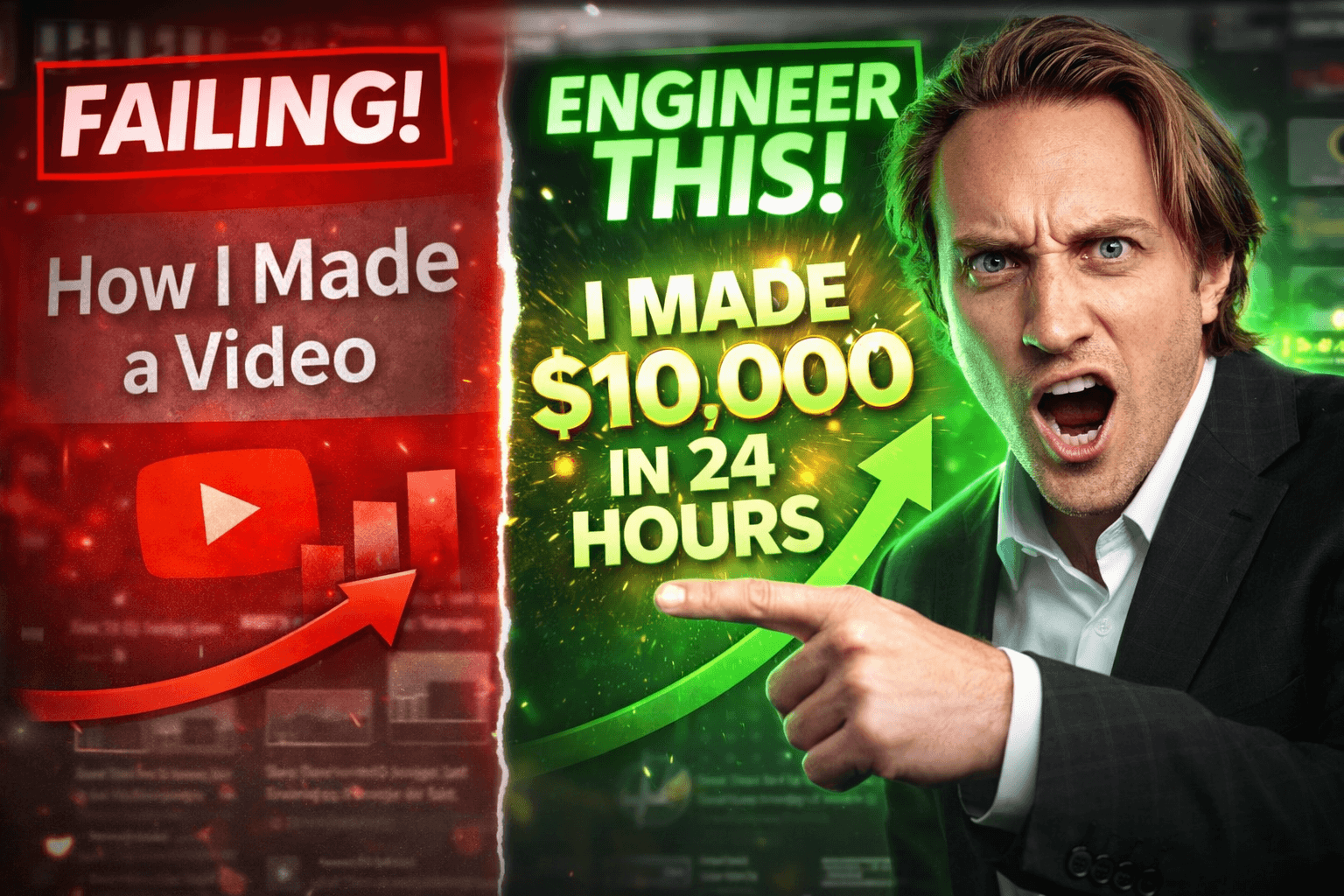


Most creators are building content that never gets a chance
The default belief is simple.
If the video is good, it will perform.
It won’t.
Because the video is not the first system the viewer interacts with.
The title is.
And most titles are built wrong.
They describe.
They label.
They summarize.
That is not how attention works.
Attention is not given to clarity. It is given to tension.
So the real problem is not content quality.
It is that creators are shipping content without building the entry mechanism that makes it visible.
The title is not packaging. It is control
Weak operators hope people click.
Strong operators design the click.
That is the line.
A title is not a name.
It is a behavioral lever.
It either:
- creates motion
- or gets ignored
There is no middle.
This is the category shift:
Title writing is not copywriting. It is behavioral engineering.
The system most creators miss
Let’s name it cleanly:
The Click Engineering System
Every high-performing title is built on one dominant emotional driver:
- Curiosity
- Fear
- Desire
These are not creative choices.
They are control mechanisms.
Curiosity: engineered incompleteness
Curiosity is not about being clever.
It is about being incomplete on purpose.
A weak title closes the loop:
“How I got 100K subscribers”
A strong title opens it:
“I tried something that changed everything”
One informs.
One creates tension.
The mechanism is simple:
The brain hates unfinished patterns.
So it seeks closure.
Curiosity is controlled ambiguity.
Fear: personal risk activation
Fear is not negativity.
It is relevance.
“This mistake is killing your channel”
Now the viewer is not watching for information.
They are watching for self-preservation.
That is a different behavior.
The system works because:
Loss feels more urgent than gain.
Fear converts passive viewers into self-diagnosing users.
Desire: compressed transformation
Desire titles promise movement.
Not effort.
Movement.
“From 0 to 10K subscribers in 30 days”
It collapses time.
It removes friction.
It suggests proximity to outcome.
This is critical:
People do not click for content.
They click for a better version of themselves.
The real shift
Old model:
Write a title that explains the video.
New model:
Write a title that creates a decision.
That is the difference between content and distribution.
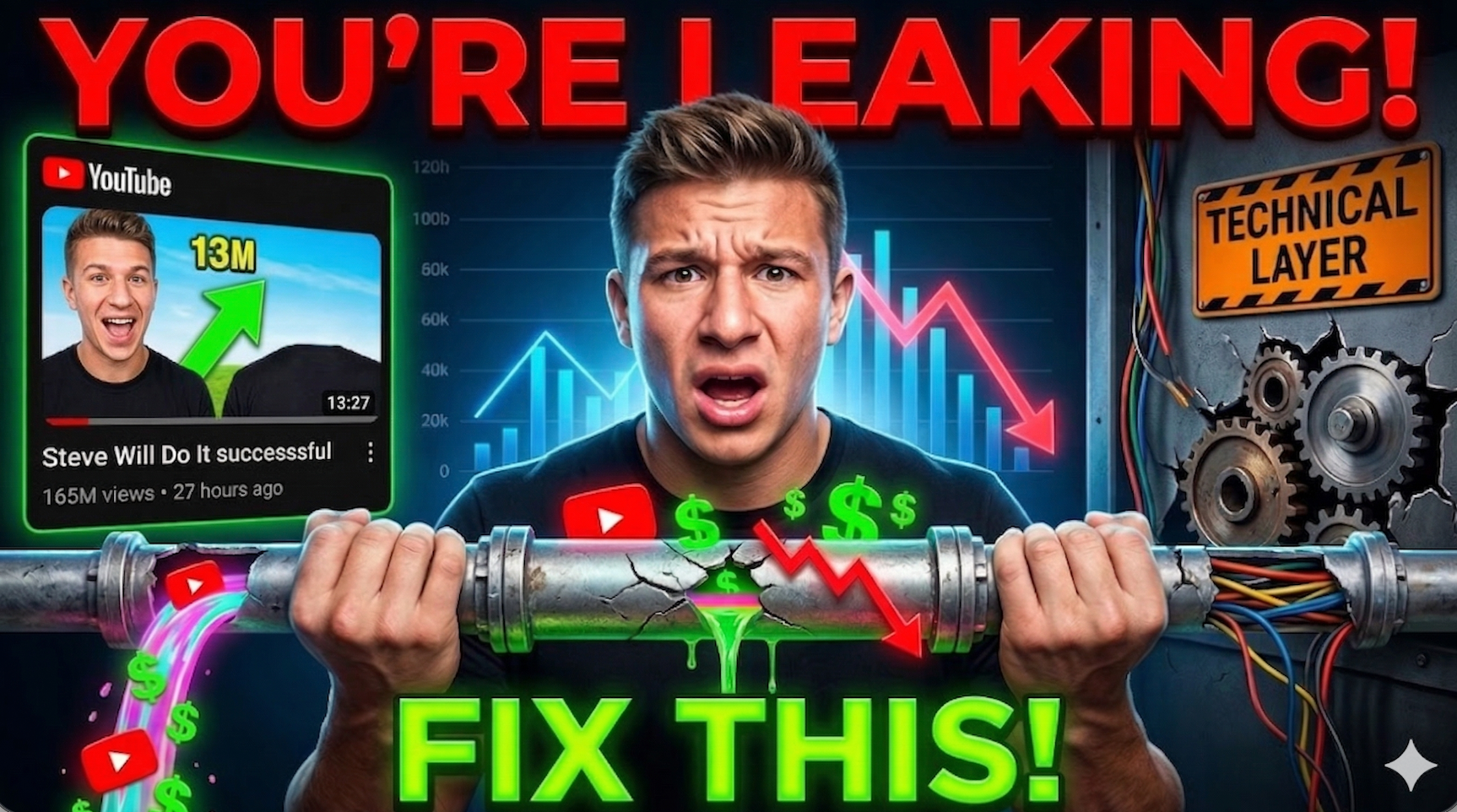
The technical layer is where most creators leak performance
Emotion gets attention.
Structure determines whether it survives.
There are four constraints that turn this into a system.
1. Compression creates clarity
7 to 11 words.
Not because it looks nice.
Because it reduces scan friction.
If it feels heavy, it will be skipped.
2. Visibility beats completeness
Under 55 characters.
If the hook is cut off, it does not exist.
Most creators hide their best idea behind an ellipsis.
That is not a formatting issue.
That is a distribution failure.
3. Frontloading is leverage
The first 3 words carry disproportionate weight.
That is where the decision happens.
Not at the end.
Weak titles build to a point.
Strong titles start with it.
4. Language is leverage
“Secret”
“Mistake”
“Zero views”
“Algorithm”
These are not buzzwords.
They are cognitive shortcuts.
They increase processing speed.
They increase emotional clarity.
Language removes hesitation.
Browse and search are not the same game
This is where most creators collapse two systems into one.
Browse traffic is passive.
Search traffic is intentional.
So the title must change.
Browse titles provoke.
Search titles resolve.
If you try to do both equally, you fail at both.
One title cannot optimize for two different states of intent without trade-offs.
The mechanism underneath everything
Here is what is actually happening.
Every title is competing against inertia.
Scrolling is the default.
Your title must break it.
It does that by removing exits:
“I already know this”
“This feels generic”
“This is not urgent”
“This is not for me”
A strong title closes those exits quickly.
That is why clarity alone fails.
Clarity does not create urgency.
What this changes for operators
If you take this seriously, three things shift immediately.
- You do not start with the video. You start with the click.
- You validate title strength before production.
- You treat titles as leverage, not decoration.
Because this is the math:
A better title does not improve a video.
It rescues the entire production cost behind it.
Why now
The environment changed.
- Feeds are saturated
- Decisions are faster
- Mobile dominates
- Attention is fragmented
This means:
The interface layer decides distribution.
Not the content layer.
Titles are no longer optional optimization.
They are infrastructure.
Second-order effect
Once you understand this, a bigger shift happens.
Creators who win are not better storytellers.
They are better system designers.
They build:
repeatable hooks
predictable click patterns
scalable attention loops
They are not guessing.
They are engineering.
Food for thought
If your titles disappeared tomorrow, would your content still get watched?
And more importantly:
Are you creating videos…
Or are you building systems that earn attention?
